One scrolling document of code, prose, charts, sheets, figures and AI steps. Put a breakpoint in a cell and step through it, with variables, watches and the call stack beside you. Every code cell picks its own language.
Part of Circuitry Studio — the same AI works in every surface, on the models you choose.
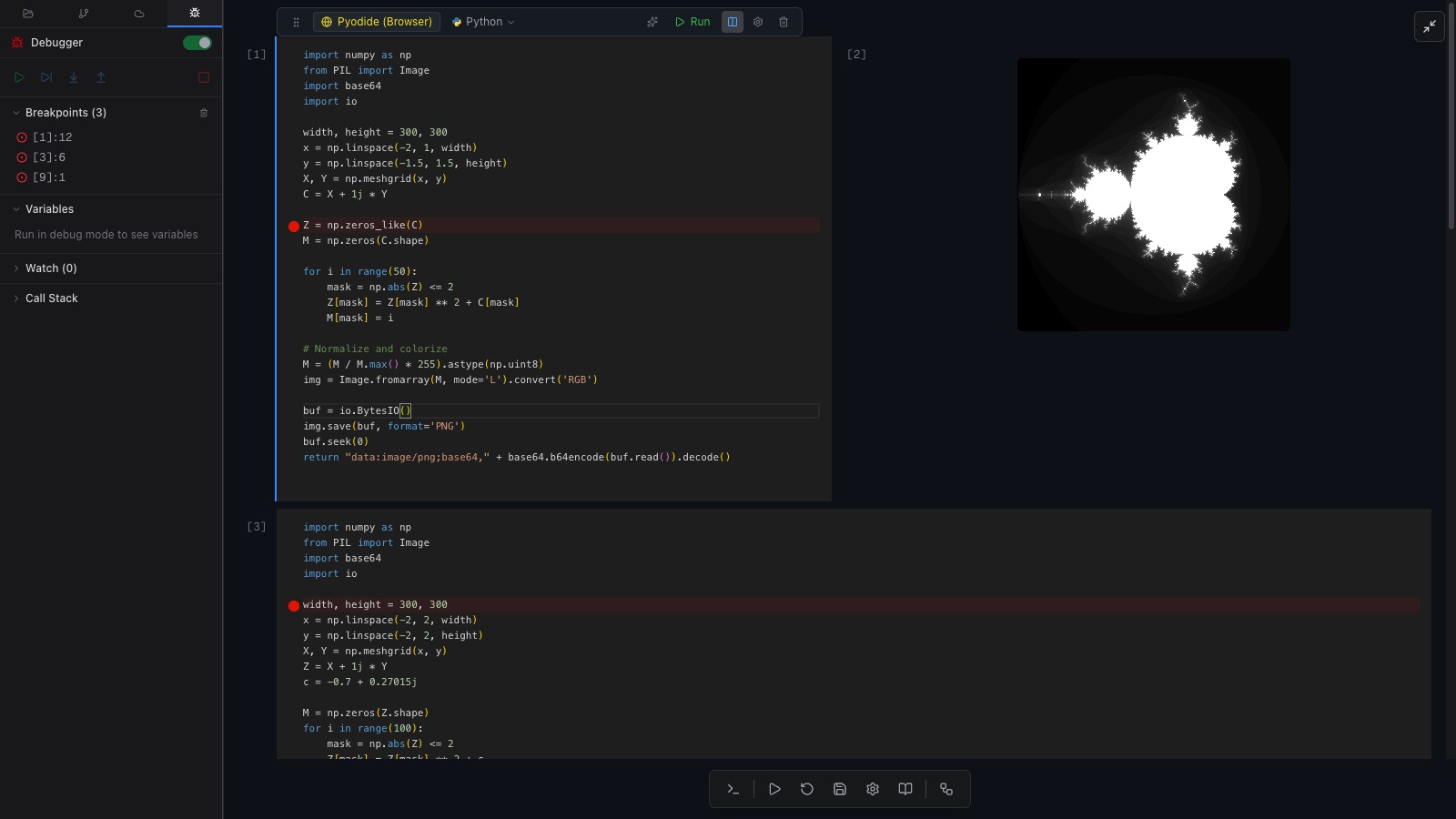
Click the gutter of a Python or JavaScript cell to set a breakpoint, then run it in debug mode. Execution pauses on that line and the panel beside the CodeBook lists your breakpoints, the variables in the current frame, your watches and the call stack. Step from there.
Breakpoints set on two cells, with the debugger panel alongside.
Python cells in a CodeBook share a single live state. Load the data in the first cell, reshape it in the fourth, plot it in the ninth — it is all still there, and it survives a re-run of one cell in the middle. Reset clears the outputs and starts the state clean.
Open the REPL and poke at the variables your cells have just created — check a shape, try a filter, print a row. Each line becomes an entry you can copy, re-run or debug. When one works, promote it and it becomes a real cell in the document.
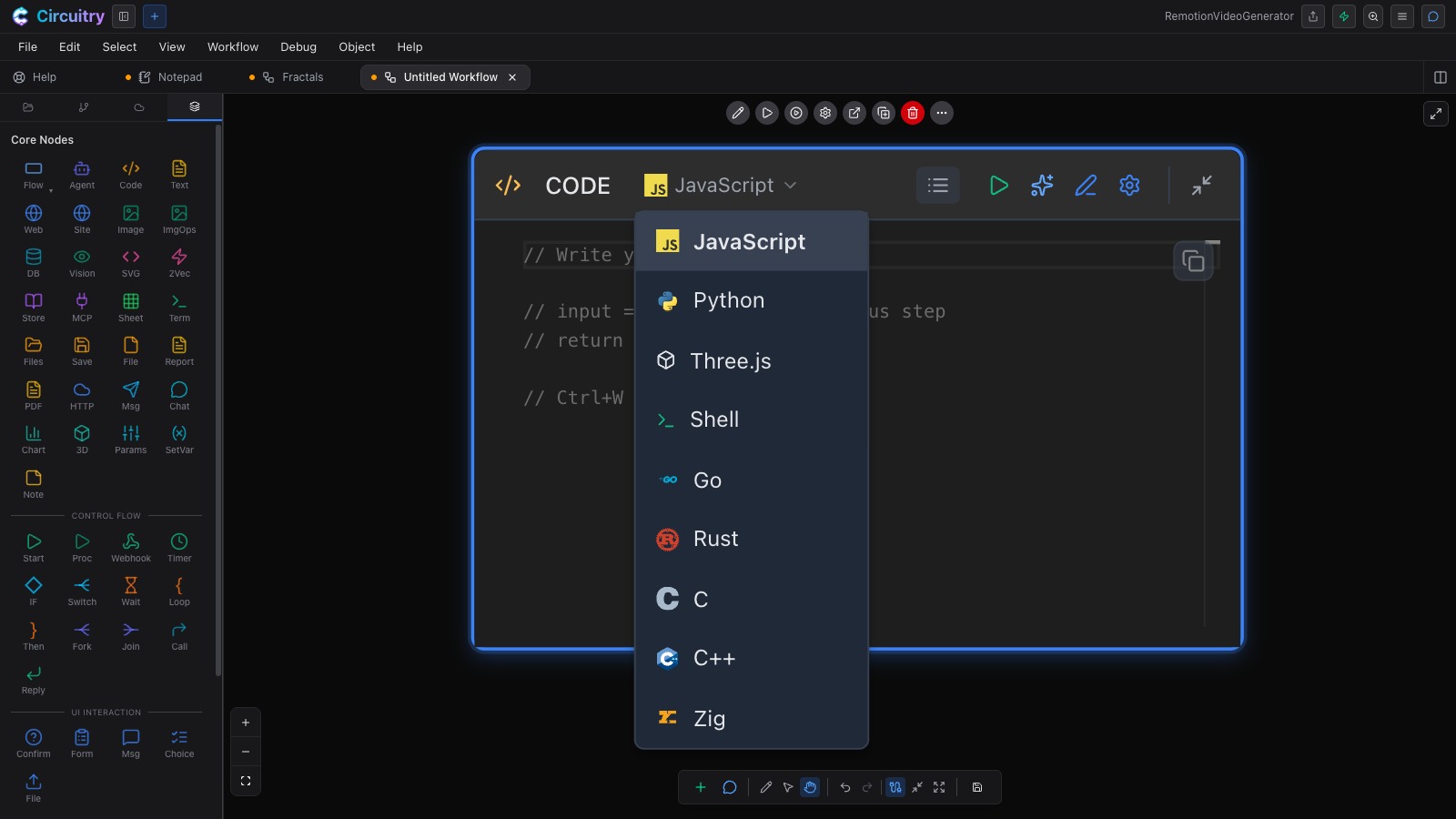
The language list. Each cell carries the same picker in its toolbar, and switching one leaves the rest alone.
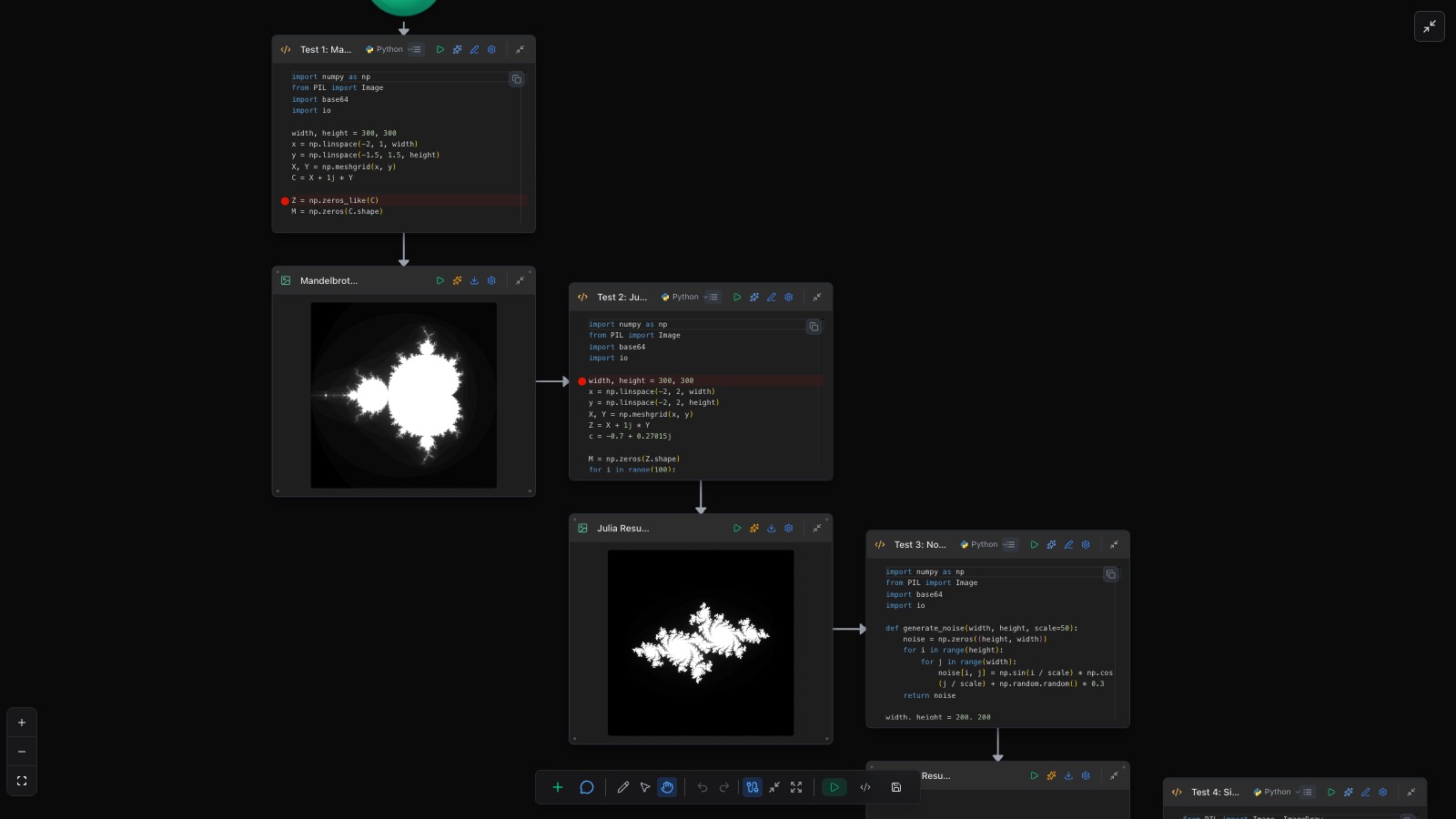
!pip install fetches anything else.A CodeBook is a workflow, and a workflow can be read as a CodeBook — one document, two ways of looking at it. Stay in cells while you are thinking and narrating; flip to the canvas when the thing needs branches, loops, parallel steps, or to run on a schedule or a URL.
The canvas view of the CodeBook above — same cells, same code, wired up.
Collapse a cell to its output with the triangle in the margin, set a chart beside the paragraph that explains it, then switch to reading mode: the editing chrome goes and what is left is the document. Share the link and someone else reads it that way too.
File → Import turns an existing .ipynb notebook into a CodeBook — its code cells, its prose and its order — and from then on it is a Circuitry document like any other.
Free for non-commercial use. Compiled languages, and reaching your own machine from a phone or tablet, need a paid plan.
The other surfaces in the studio